Two towers stitched together through the Earth’s energy
Location
Chicago, Illinois, USA
Project type
Mixed-Use
Project team
MX3
M1 Properties
Design time
8 months
Construction time
Unbuilt
Project size
200,000 SF
A strong street presence and plenty of room to breathe
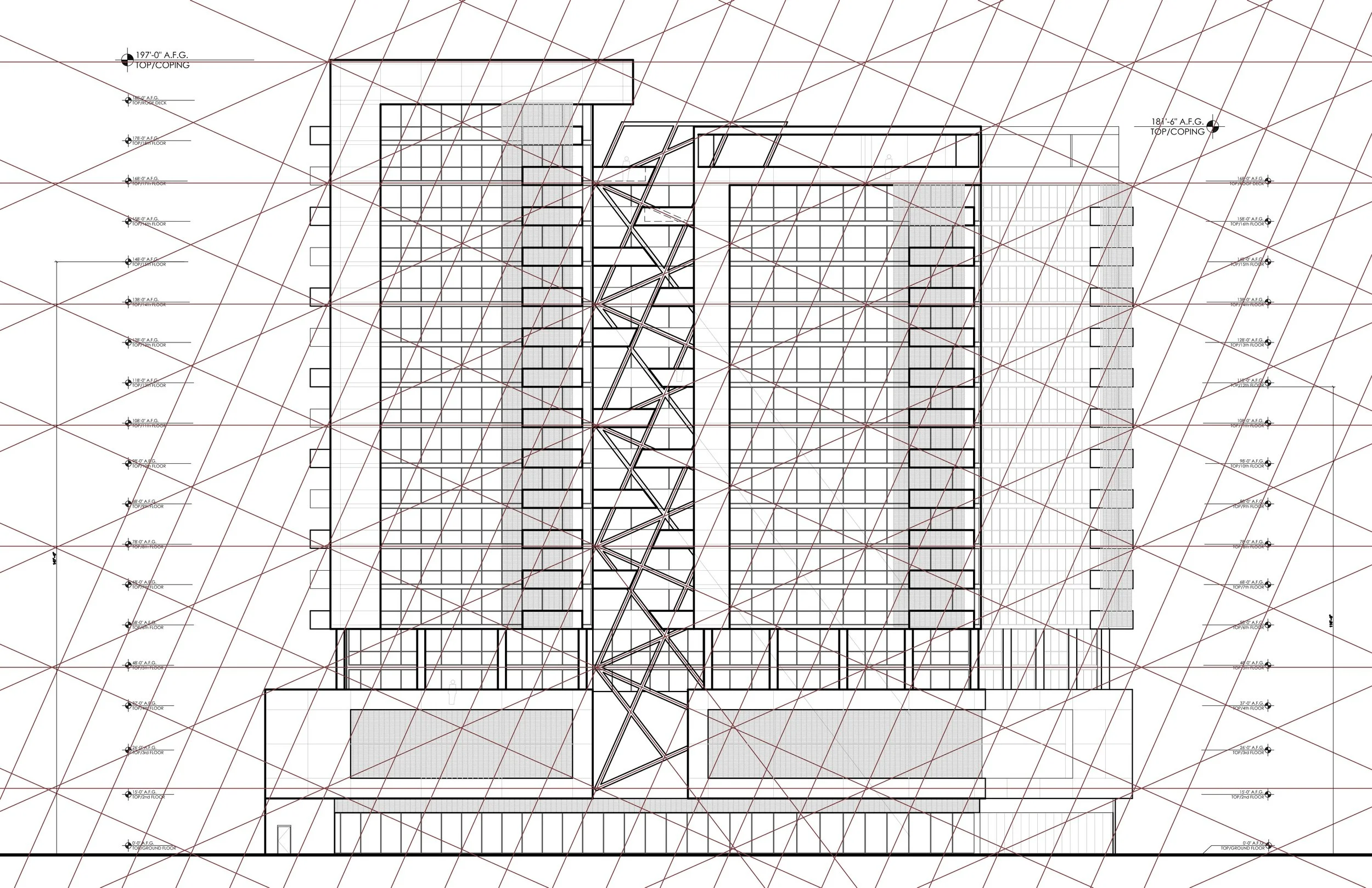
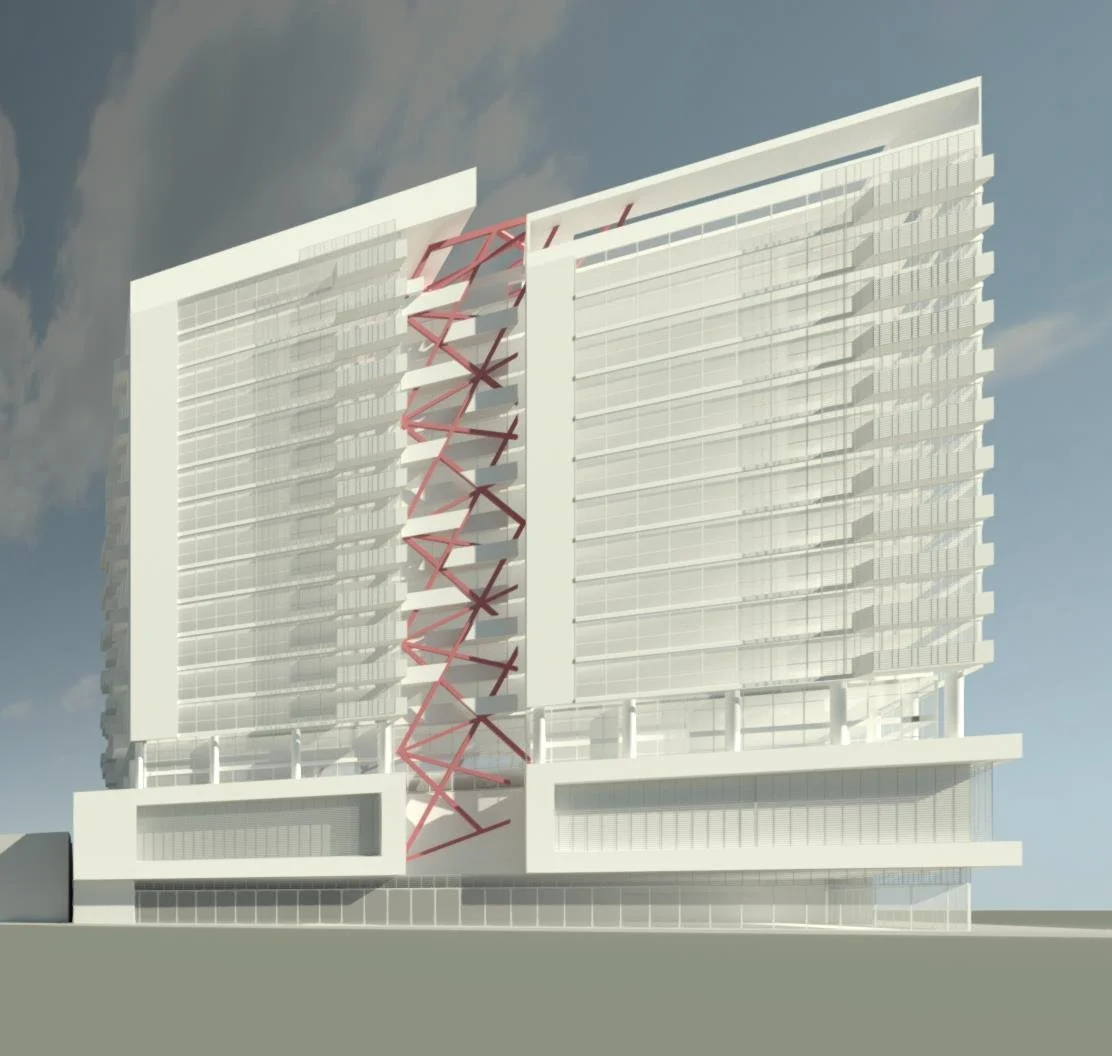
The concept emerged from our signature process: mapping the site’s energy matrix using its geo-electromagnetic data. We carved out two interlocking towers, “stitched” together with shared green space and a dynamic skeletal form that flows along the Earth’s energetic lines.
This unique design makes for a bold street presence. So we balanced it with moments of calm. Green spaces on the fourth floor and rooftop “oasis” levels open toward Lake Michigan, creating a tranquil reprieve from city life.
A spark that still resonates
Although the Uptown Mixed-Use Development was never built, its impact remains. It earned city and neighborhood approvals, which revealed that even historic communities are ready to welcome modern
Reclaiming the urban fringe
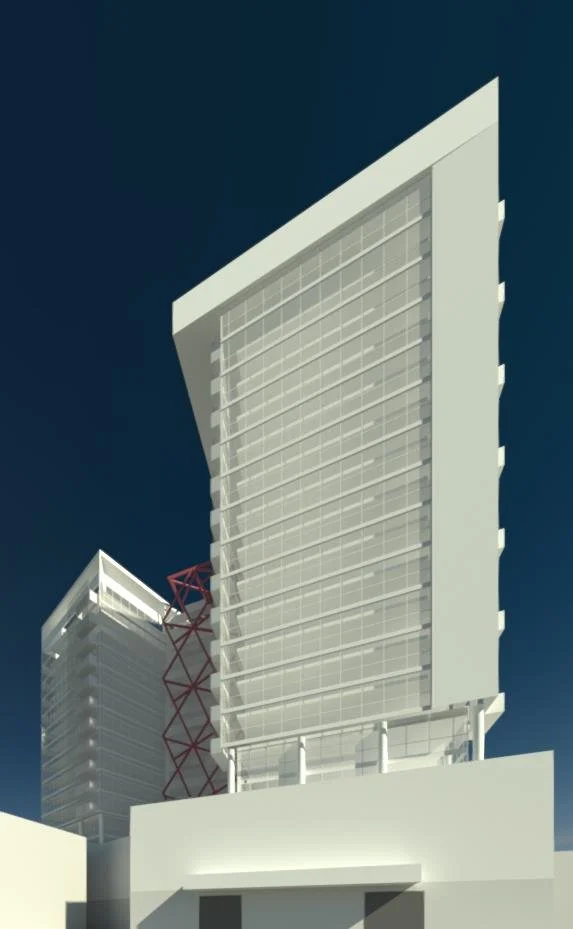
Set at the edge of a Chicago landmark district, the Uptown Mixed-Use Development was envisioned as an 18-story mixed-use anchor for a long-overlooked neighborhood. The brief was ambitious: maximize the site’s density, integrate retail and residential, and spark a wave of new development in the area.
Rather than mimic what already existed, we saw an opportunity to create something bold. A landmark in its own right, with towers that jut upward to express the site’s energy and provide oasis experiences in an otherwise blighted urban fabric.
Rooted in place with eyes toward the future
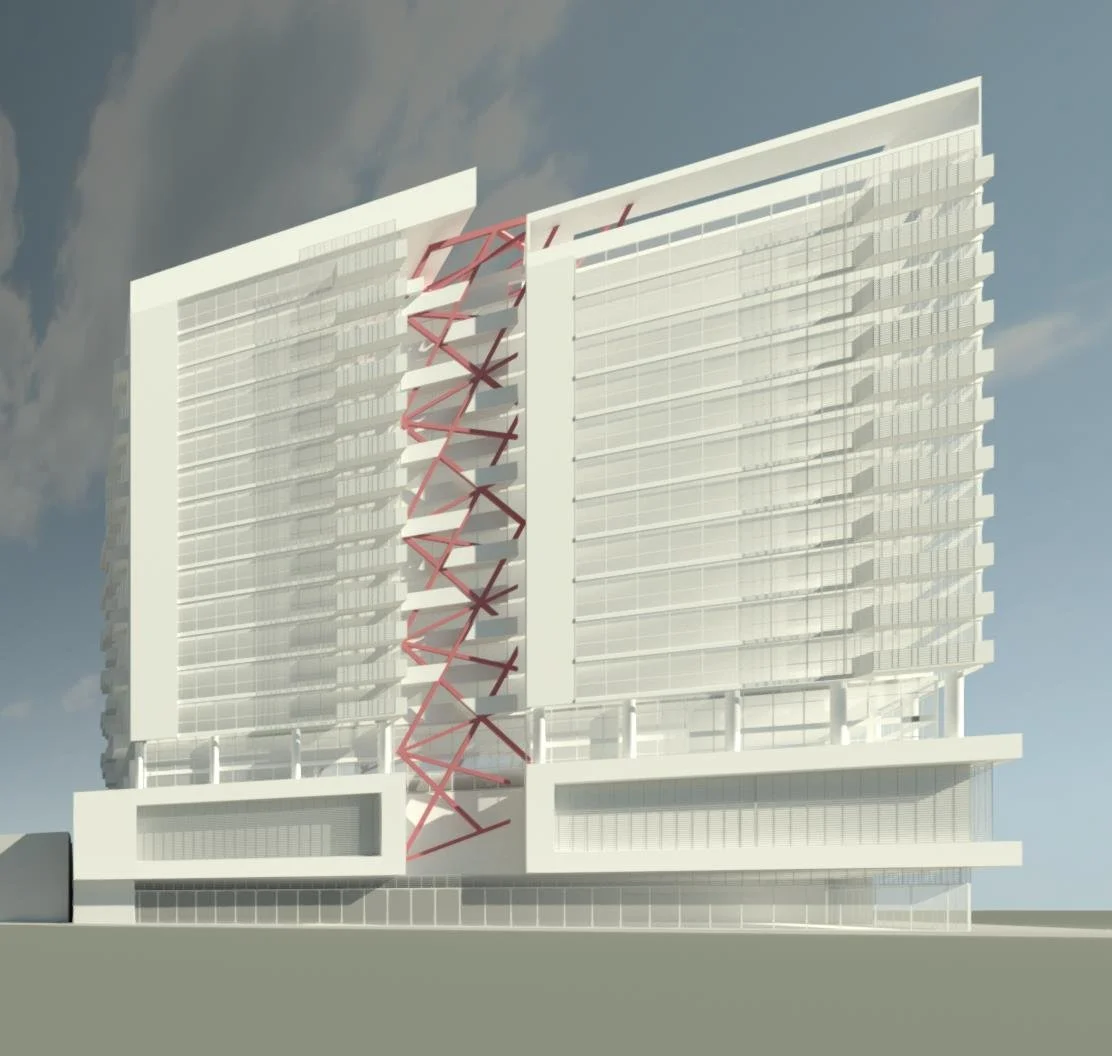
Though undeniably modern, the structure also nods to its context. A limestone base grounds the glass and aluminum curtain wall to achieve aesthetic harmony with adjacent properties.
As your gaze traces the towers, they shift into a light, airy palette of glass and white tones that echo the neighborhood’s historic white terra cotta.
The facade opacity varies in response to solar exposure, balancing daylight, privacy, and energy efficiency across the structure. The intention was to not only enhance comfort but also reflect the project’s deeper commitment to sustainable, site-specific design.